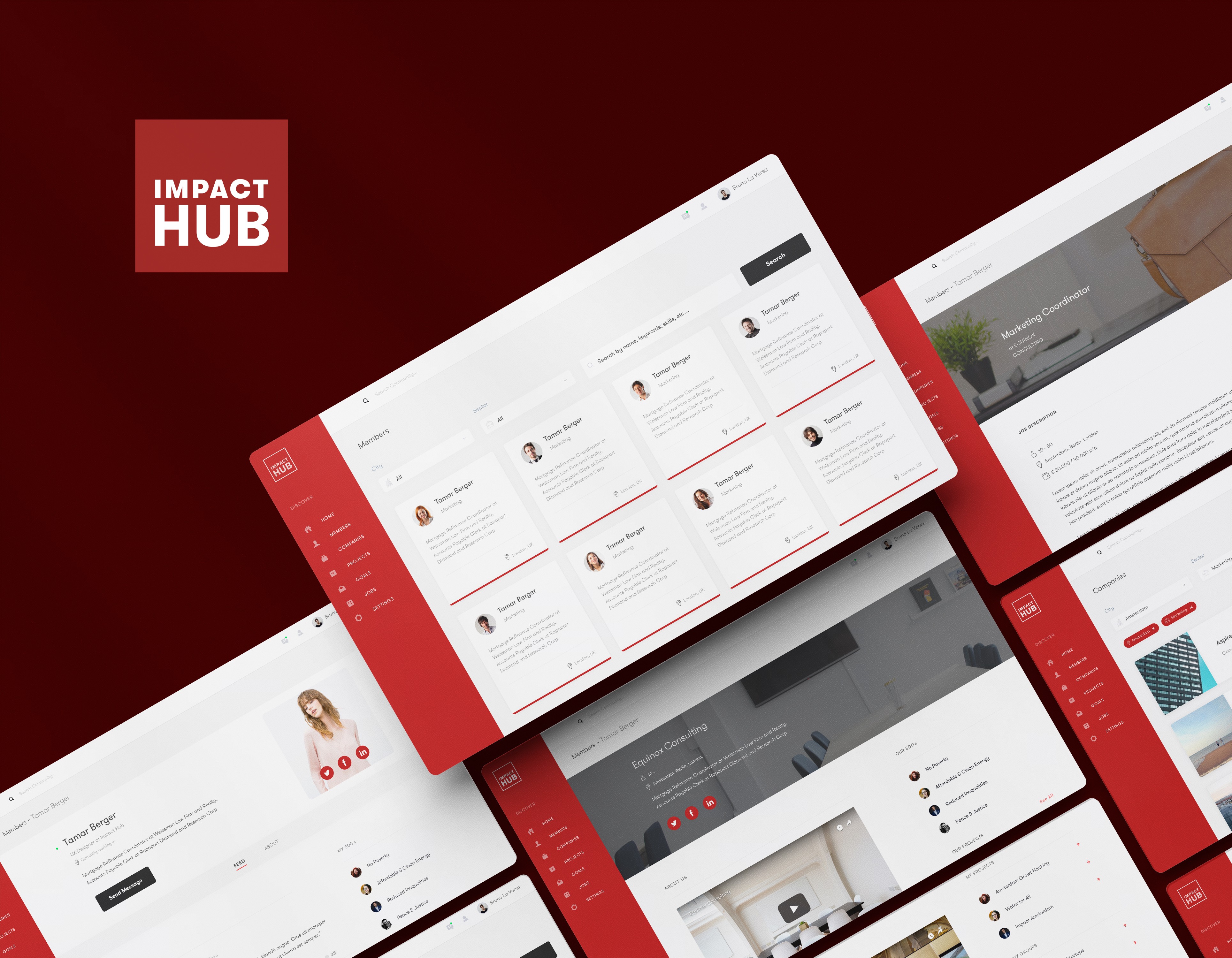
From insights to structure. The process started with deep research.
Through Human-Centred Design sessions, interviews, and workshops with hub managers, makers, and members, we gathered direct insights into how people actually worked day to day, not how the system was assumed to be used.
The quotes and feedback revealed recurring friction points:
difficulty finding the right people or information without repeating searches
lack of clarity around content relevance (projects, SDGs, resources)
friction in collaboration across hubs and geographies
too much cognitive load when managing tasks, contacts, and cases
These insights became the foundation for the product architecture, not just inputs, but drivers of design decisions.
Designing a connected system
Rather than treating features as isolated tools, the platform was designed as a connected ecosystem.
Insights fed into personas, which informed Human-Centred Design frameworks.
From there, we defined how knowledge, resources, connections, and experiences should flow across the platform, ensuring each part supported the others.
This system thinking allowed the platform to:
surface the right information at the right time
reduce duplication and unnecessary steps
create continuity between discovery, action, and collaboration
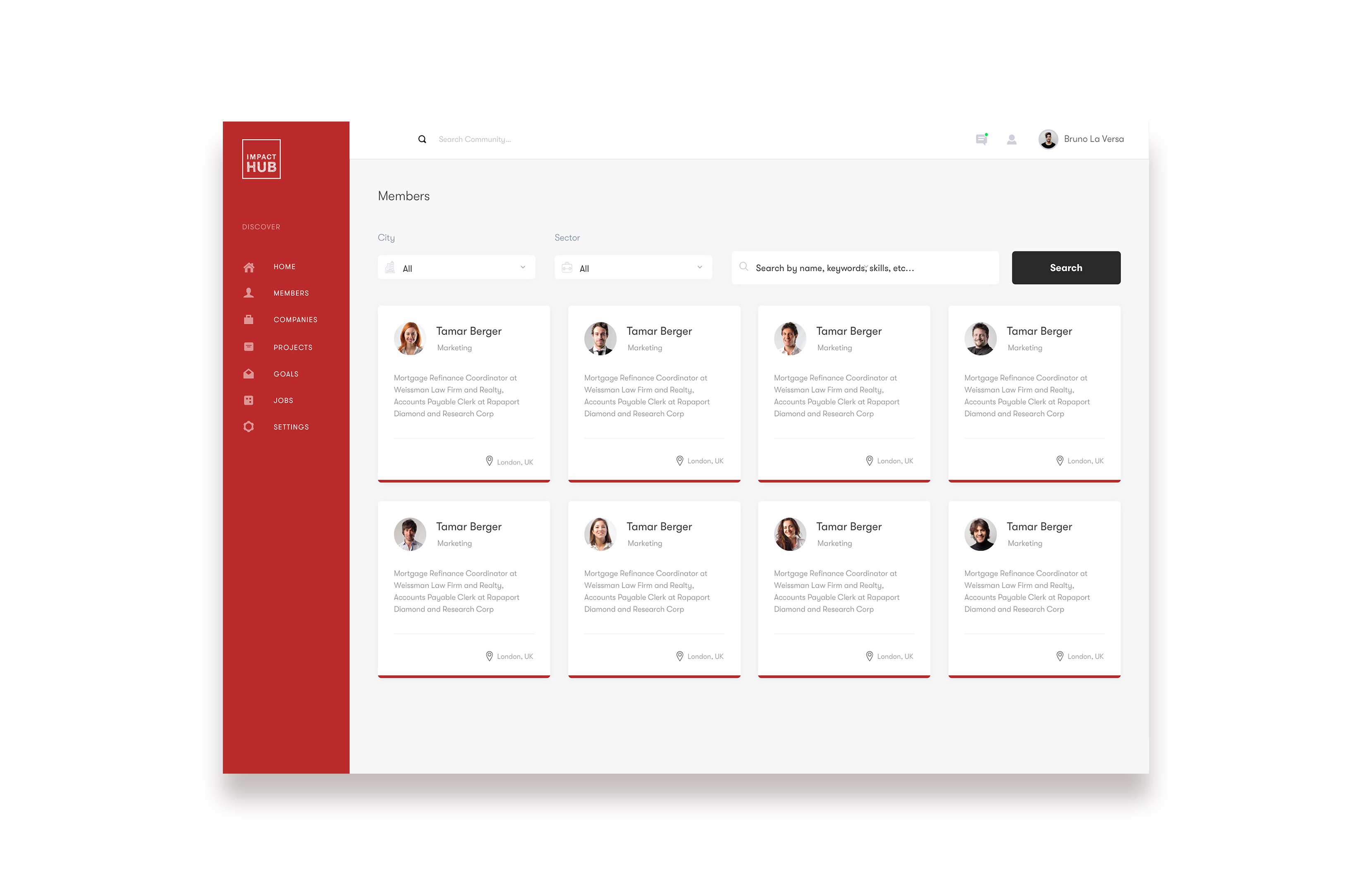
One of the core UX challenges was search.
Users didn’t want to search multiple times for the same intent, for example, finding both members and companies in a specific city or domain.
In response, I designed a unified search experience that worked across entities, supported by tagging and segmentation.
This allowed users to:
search across contacts using multiple dimensions
create segments (tags) from search results
reuse those segments for communication, follow-ups, and tasks
The result was a shift from static lists to dynamic, reusable groupings that reflected how people actually work.
Another key area was collaboration between makers and hubs.
Private groups and messaging were designed to allow focused conversations without polluting larger community spaces. At the same time, the platform enabled the creation of shared resources, articles, best practices, and FAQs, so knowledge didn’t live only in conversations, but could be reused and scaled.
This balance between private interaction and shared knowledge helped:
keep discussions relevant
reduce noise
build a growing, accessible knowledge base across hubs
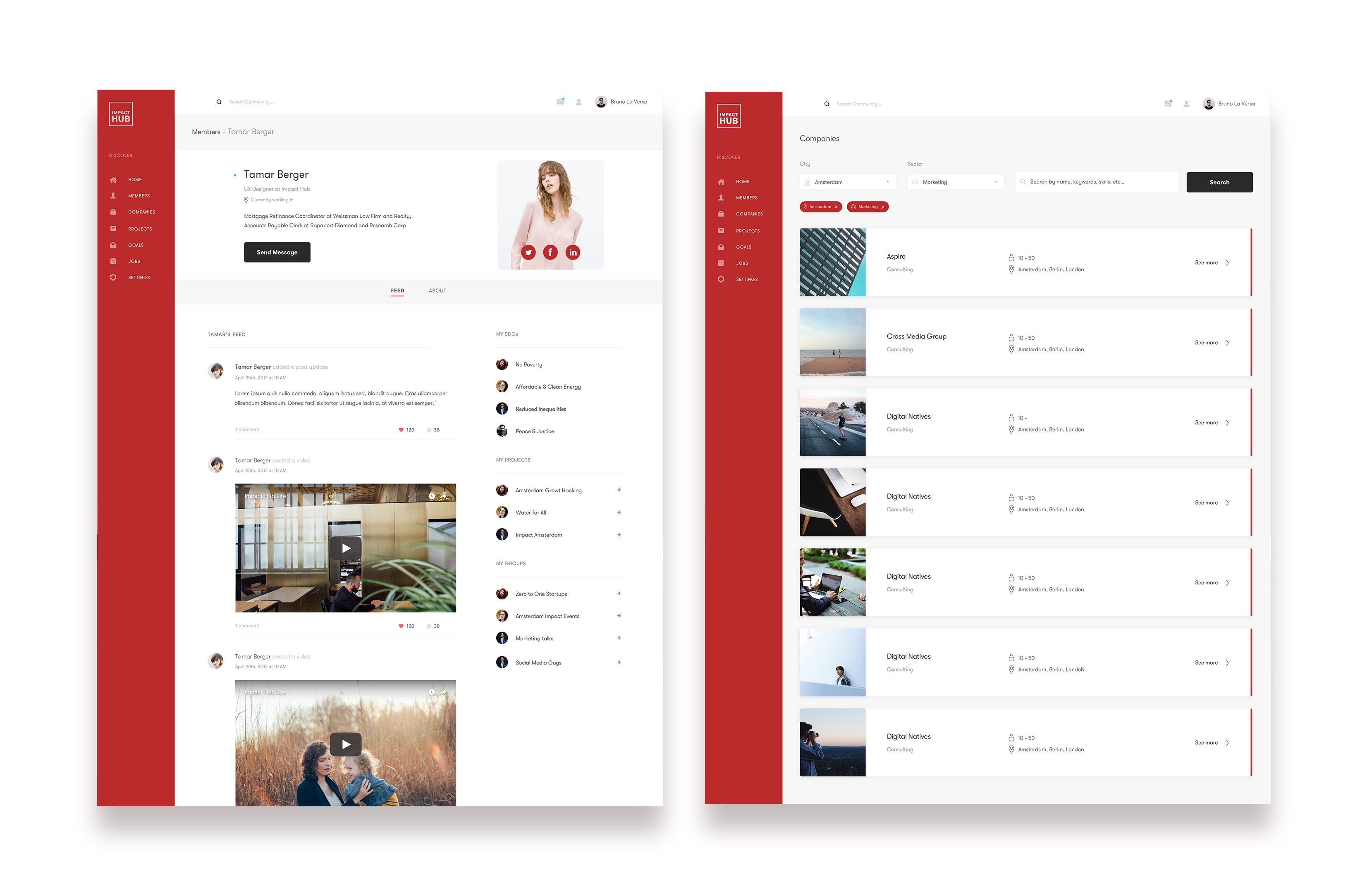
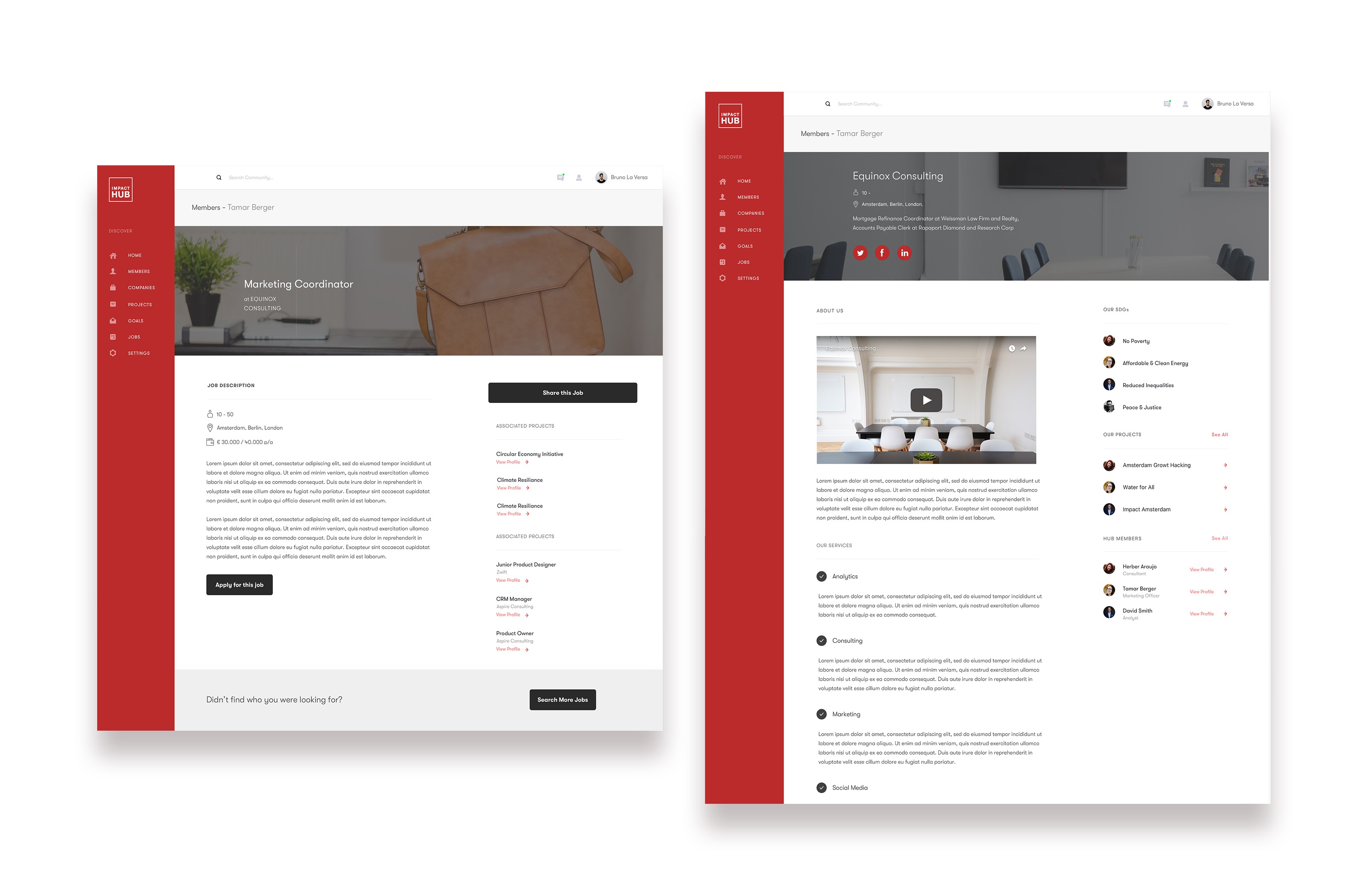
The work for Impact Hub resulted in a platform that balanced global consistency with local flexibility.
By grounding the design in real user insights and thinking in systems rather than features, the product:
reduced friction in search and collaboration
improved clarity across complex workflows
enabled hubs to work more efficiently without losing autonomy
created a foundation that could scale as the network grew
More than anything, this project reflects my approach to product design:
listening first, structuring complexity carefully, and designing systems that support people, not the other way around.
Next projects.
(2016-26©)